Happy 6th Birthday, Ginny!

Dear Ginny,

Happy Happy Happy Birthday, My Girl! Six years ago you made me a mom. I remember holding you and kissing you on this day 6 years ago. I wish so badly that I could’ve seen you grow into a spunky and silly and smart kindergartener. I miss you with my whole heart. 

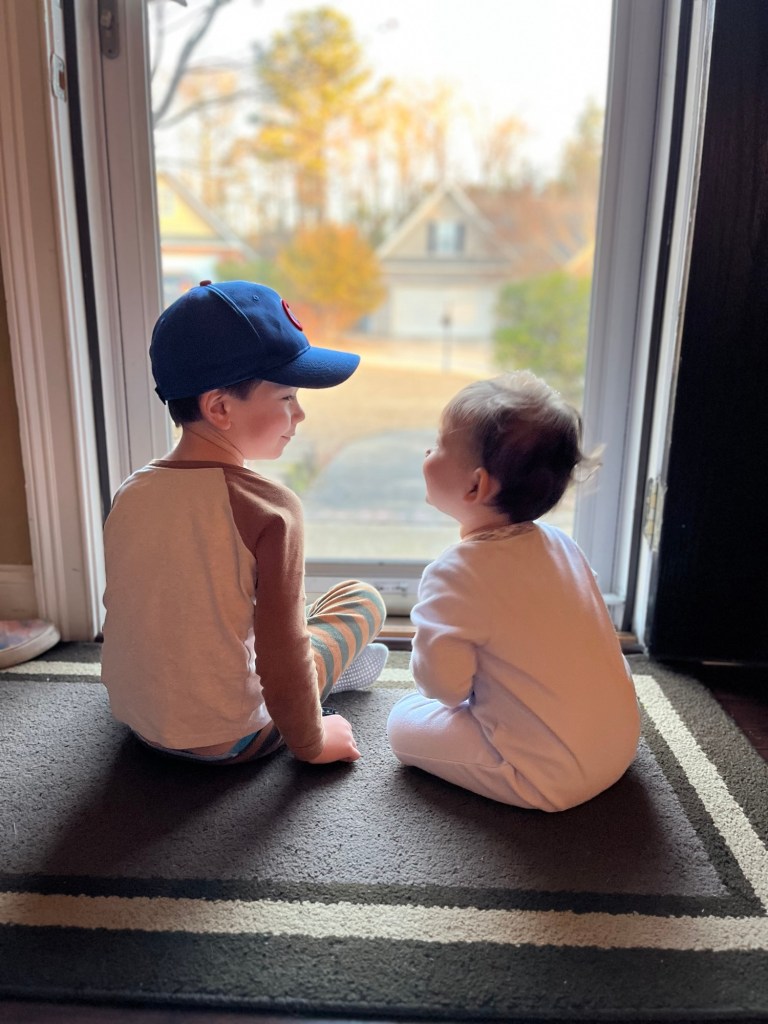
We love you so much! Your brother and sister love you too and want to play with you. As soon as Chet saw his teacher today, he said, “Today is my big sister Ginny’s birthday!” We’ve been wondering what you are doing in heaven. We wondered if you’d eat cinnamon rolls this morning like we did. I wish you could be with us at the arboretum later for cake and a walk. We have balloons and sunflowers for you! 

I have so much hope that we will be together again in heaven. I can’t wait to feel your sweet presence again and hug you so big! You are truly a blessing to our family every single day. You are so so loved, Ginny Hope! Happy Birthday!

Love, Mama

6 Years Ago – The Day of No Heartbeat

Lord, you are the creator and sustainer of life. How could you?

Lord, how could you let me sleep soundly while she was struggling?

Lord, how could you let me eat a nourishing breakfast while she was malnourished? 

Lord, how could you let me slowly ready for the day while she couldn’t get the oxygen to live? 

Had I known, I would have rushed to save her! Had I known, I would have done anything!

But I was kept in the dark, and then into deeper darkness I fell. 

I had no warning, no real fear, no anticipated grief, no chance to save her. Was this your mercy? 

Was this what you call mercy??

I’m her mother! – but you are her God. 

Self-Doubt / My Preeclampsia Story

One simple question- one kind and thoughtful question- was enough to gather a mountain of self doubt in me. “How are you feeling?” Pregnant women get asked this everyday. And the further along you are, the more the question comes up. In the last days of my pregnancy with Addie, I was asked in every encounter. How am I feeling?  I would even ask myself. It shouldn’t be a hard question. But when I pondered this question, I could feel my blood pressure rise.

Because of my personality (Enneagram 9 if you are into that), this question is naturally hard for me. My answer is usually dependent on the moods of those around me. When it comes to deciphering your own emotions, that’s challenging for a lot of people. But most people could easily tell you how they are physically feeling. Not me. Not in the last days of pregnancy and early days of postpartum. And that’s a bad time not to know how you feel. 

I think my trouble stems from how much I didn’t feel during the end of Ginny’s pregnancy. Shouldn’t I have felt that something was wrong? Shouldn’t I have known Ginny was struggling? Shouldn’t my body or my motherly instincts have given me a signal? Did I ignore something? Did I fail to notice red flags? Or do I lack motherly instincts? Can I be trusted with this?

On top of that, during the last month of pregnancy with both Chet and Addie I suffered from prodromal labor. That means I had strong contractions frequent enough to warrant going to the hospital without much, if any, significant progress. I would have hours of painful contractions every 3-5 minutes, and then they would go away to come back in a day or two. So many times I felt I was going in labor to only feel crazy at the next appointment when my cervix hadn’t dilated more. I remember crying to a labor and delivery nurse after being sent home the 2nd time when I was pregnant with Chet. She said, “You aren’t going to miss an 8+lb baby coming out.” But she didn’t understand; I needed my baby to be monitored! How would I know that he is handling the contractions well? My last baby died without me knowing! How would I know if this baby was dying too? I learned to lean on God and to basically ignore how my body was feeling. I would monitor the baby’s movements, but try to ignore my pain. In those moments, how was I supposed to answer “How are you feeling?” When I answered honestly, family and friends would get excited, believing that the baby was coming soon. I had to explain that my contractions don’t mean much, and I would feel so frustrated. I wished everyone would just stop asking me, but I knew they were just being thoughtful. 

I was so relieved when Addie was born. But little did I know that answering about how I was feeling wouldn’t get easier. In fact, it would become a lot harder. 

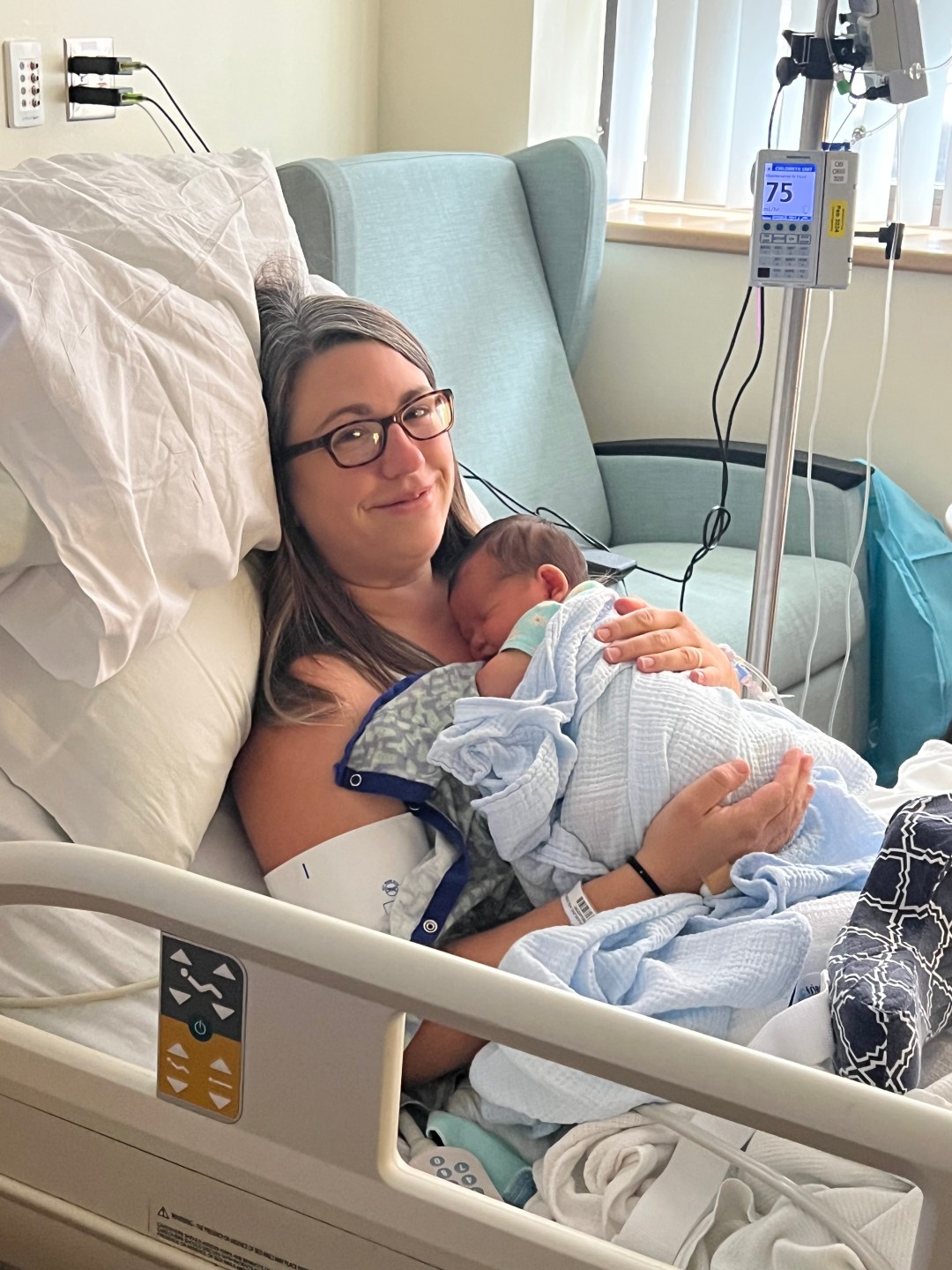
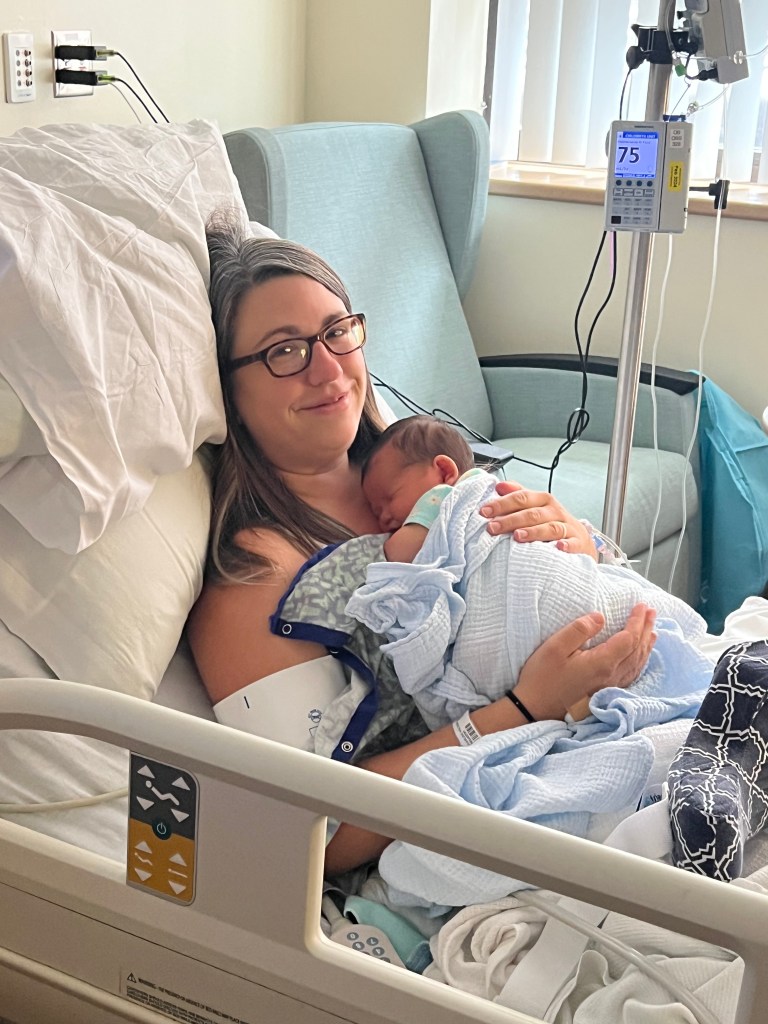
Besides the normal but excruciating post-birth contractions, the first few days after delivering Addie I felt fine. We came home from the hospital, and breastfeeding was going relatively smoothly and Addie was gaining weight back. My milk came in with the bitter-sweet reminder of postpartum with Ginny. All was well. But slowly I noticed my chest feeling funny. I couldn’t quite put my finger on what felt off. I felt sort of anxious, and I felt very aware of my heart and my breaths. I took my vitals. My blood pressure was slightly elevated and my pulse was lower than it had ever been. I didn’t feel right. But then again, I just had a baby. Was I supposed to feel “right”? I called the doctor. They were most concerned about postpartum preeclampsia. The only symptom I had was high blood pressure, and that was only borderline. I continued to monitor my vitals. I became worried and so anxious that I couldn’t sleep, even when Addie slept. Being anxious wasn’t helping my blood pressure. I tried to calm myself before taking my blood pressure, but the numbers were slowly rising. What helped the most was holding Addie to my chest. But it was the last day my in-laws and my sister would visit, so I had to share the cuddles. The next day family hesitantly left. As the day went on, I felt worse. My blood pressure got up to 170/94, and my doctor sent me to the hospital. Since family had already left, we had to rely on our amazing friends to care for Chet. Daniel and my hearts broke to leave him during an already uncertain time for him. Thankfully Daniel and I could bring Addie to the hospital with us.

When we arrived at the hospital, I was again faced with the question “How are you feeling?” from every nurse and doctor I encountered. I hated using phrases like “my chest feels weird” or “I just feel really off”. Nothing felt concrete enough. And I was only 4 days postpartum, so I knew it was normal to not feel myself yet. I kept doubting myself. Am I giving myself high blood pressure by needlessly worrying so much? Do I feel weird because I haven’t slept? Is this just anxiety? But my blood pressure was high, and I have two kids who need me. It’s better to be safe than sorry. They checked my levels for other indicators of preeclampsia. The doctor came in and made it seem like he wasn’t concerned with the results. He asked one last question, “Do you have a headache?” I froze. Do I have a headache? This is a yes or no question. It shouldn’t be hard, but my head felt really fuzzy. I couldn’t tell if I was manifesting a headache by thinking about it so much or if I truly had a headache. I explained my disclaimers to the doctor, “I have a newborn so I haven’t really slept in 4 days. It’s really hard to tell. I do have a slight headache when I shake my head, but honestly I wouldn’t even take a Tylenol for it.” His response felt like something that would happen in a nightmare. “Well since you answered my question wrong, I’m going to have to admit you.” I said, “Uh ok. Are you going to just monitor me or treat me.” He said, “I’m treating you with magnesium.” I asked, “Are there side effects?” He said, “You’re not going to like it.” Then he left, and the nurse proceeded to recite a long laundry list of horrible side effects from feeling really hot, to stomach flu-like symptoms, to inability to move, to trouble breathing, to not being able to nurse your baby. She left me to change into a hospital gown, and I started to panic. What have I done?! Why couldn’t I just chill the hell out and enjoy being home with my two beautiful babies? Why oh why did I answer that question “wrong”?! 

The first night of magnesium treatment wasn’t too bad. And thankfully my sister was able to come back to Auburn the next morning to take care of Addie in the hospital with me while Daniel was able to give Chet a little bit of normalcy. My blood pressure had come down. But then as the morning proceeded, side effects started ramping up. I had trouble holding my head up. I had to focus a lot to breath. I couldn’t sleep for fear I would stop breathing. I could barely lift my arms. Eventually my eyes could no longer move in coordination with each other, and I could hardly see.  I was so grateful the wonderful OB who delivered Addie was the next doctor on call. The nurses explained how I was having an awful reaction to the magnesium, and thankfully she decided to pause my treatment.  It didn’t take long for the magnesium to leave my system and for me to feel much better. Since my case was borderline, I was able to go home once my bloodwork came back good.

The nurses had such a hard time drawing my blood. After being poked by the nearby nurses, the charge nurse, the “vein whisperer”, the one who trains everyone else to draw blood, and finally “the big guns”, I was stabbed 20 times. But honestly God gave me so much grace for that. It was amazing to get to meet all those incredible nurses. One of the last attempts, there were multiple nurses in the room. The one trying was praying out loud, “In the name of Jesus!” I said, “Yes!” in agreement. She got it! The results came in, and my calcium levels were critically low. I was given a couple bags of calcium, and then was finally able to go back home after two nights. 

When I got home, I hid my blood pressure cuff. I didn’t even want to look at it. I would be seen for a follow-up in a few days. I was going to just focus on resting, recovering, and snuggling my babies. Thankfully my blood pressure went back to normal after a few weeks. And when I saw my primary care doctor a couple months later, she told me that my labs did look like I had preeclampsia. I felt validated. I finally felt like what I was feeling was not in my head and that I went through wasn’t for nothing. In the first few weeks when I thought back on that experience, I felt so much self doubt and shame. But when I take a step back and think about how I recognized when I felt something wasn’t right, spoke up about it, and got treatment to protect myself from something much worse, I am proud of how I handled it. It was awful, but it was better to be safe than sorry. And I am so grateful that both Addie and I are safe and healthy.

I still struggle to know how I feel and whether what I feel is fear, instinct, or the Holy Spirit. I pray that God gives me wisdom and discernment in my feelings, especially in parenting after loss. 
Condolences: What to say to a grieving friend

In the days immediately following Ginny’s death and birth, our lives stopped. That time was full of grief and emptiness and churning hearts and not much else. I couldn’t fathom how the world was continuing to turn and how the explosion that was our lives really only impacted our sole townhome. Everyone else was going to work, seeing friends, fixing dinner. We felt isolated and a little crazy. The only things that connected us to the rest of the world were condolences. And how I treasured every single condolence! 

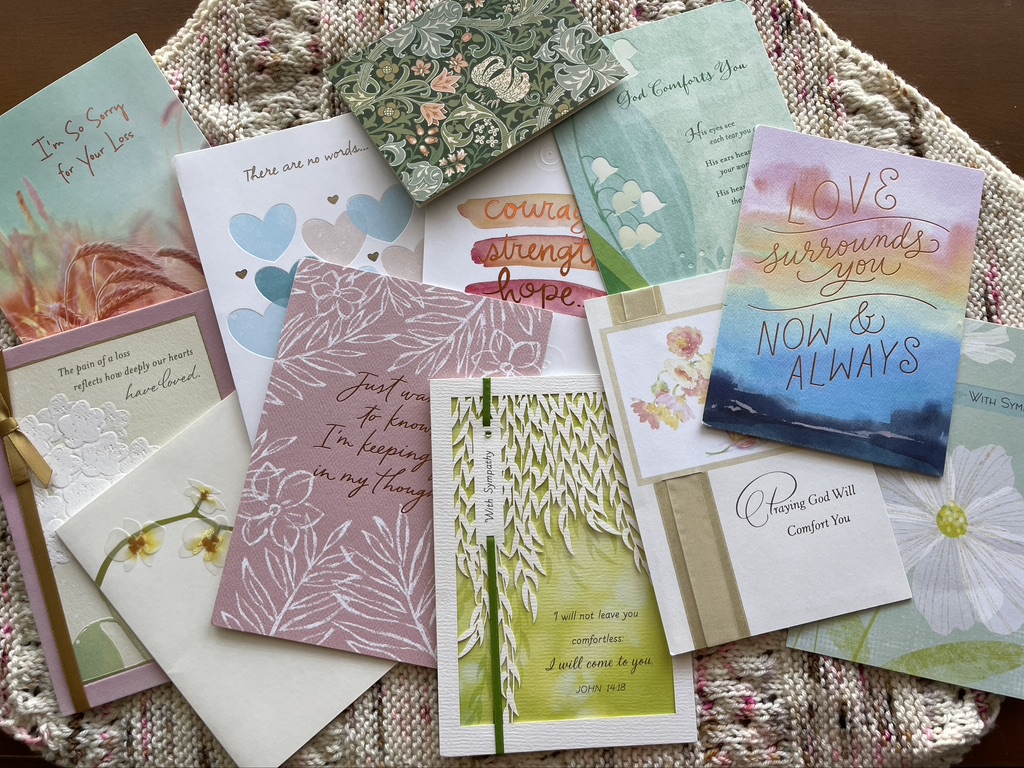
The walk to the mailbox got me outside in the sun and moving my achey postpartum body. I smiled as I counted the pastel colored envelopes. These sympathy cards not only brightened my day, but gave me something to do. Daniel and I slowly opened each one and poured over the encouraging words. These words showed us that we weren’t actually alone, that the impact did affect more than just us, and that Ginny was not nearly forgotten. The words validated that this experience is truly tragic and difficult. We felt all the love, and it helped lift our hearts a little. 

As time went on, the cards came less frequently which actually made them even more meaningful. Some friends even sent more than one card in the months following Ginny’s death. How insightful to know that we would continue to need support and reminders as the condolences started subsiding! We were thought of again on Mother’s Day and Father’s Day and again on Ginny’s 1st birthday. We needed each one of those cards and care packages, and they were all so much appreciated. 

I had never been good at condolences. I don’t think anyone thinks they are good at it; it’s a hard thing that no one teaches you. People don’t like talking about death and are afraid to say the wrong thing. I don’t know how many times I’ve thought of sending a sympathy card but didn’t because I thought “They don’t actually know me that well. It might be weird.”, “Too much time has passed. I missed the window.”, “I don’t even know what I would write.” Now I know I was foolish to think those things. I should’ve 100% sent a card.  As I mentioned before, the cards that came later – even weeks or months later- were even more special because it showed that people were still thinking of us and of Ginny. In the same way, cards that came from acquaintances or friends of friends who we’ve never met were so meaningful. It showed that Ginny’s life and death impacted more than our little circle. Those cards blessed us so much. I vowed to always send a card or a gift anytime I hear of a loss. I haven’t been the best at that, but I want to get better and better. It really is important. 

As far as what to say, I now have many examples of messages that encouraged and supported us in those early days. I want to share a small sample with you in hopes that it will inspire you reach out to those who may be grieving around you. 

Below are a few of the most common, most encouraging, and most thoughtful parts of messages people sent:
“I’m so sorry.”
“There are no words strong enough or big enough to ease the pain, but you have been on my mind.”
“I’m thinking of you and praying for you.”
“I don’t know what to say.”
“My heart is broken for you.”
“I’m here for you if you need to talk or sit in silence.”
“I think of Ginny often.”
“No one can replace her.”
“You are amazing parents.”
“Ginny has changed all of us.”
“I’m proud of you.”
“Ginny’s life was a gift from God.”
“Ginny is blessed to have you as her mom.”
“It is no fair and we don’t understand, but we cling to the promise of a new day and joy to return.”
“Ginny will always be yours, and she will always have a special place in your lives.”
“Everyone who loves you, loves her.”
“Ginny will always be part of us.”
“Jesus grieves with us.”
“You are not alone.”
“Your memories will stay with you.”

I also so appreciated messages that included memories of my pregnancy, scriptures or poems, brief stories of their loss, and anytime someone spoke of Ginny by name. Everyone is different so these may not be as encouraging to everyone, but they sure were to me. 

In addition to cards, we were blessed with flowers, donations to nonprofit organizations in Ginny’s honor, gift cards for food delivery, gift cards to movie theaters, meals, books about grief, handmade blankets and shawls, ornaments, and care packages with treats & self-care items. Any of these would be a wonderful gift to give someone grieving. We also received some very special personalized gifts. One was a stuffed bear made out of one of Ginny’s outfits and weighted to the exact weight she was at birth. We received a Bible with her name on it. We were given handmade baby blankets and hats. Even though we couldn’t wrap Ginny in those blankets, they were still so meaningful. We treasure all these thoughtful gifts. 

We were also sent a special care package from the One Wing Foundation. I know there are a few other organizations that do similar care packages such as Hope Mommies and Kindness for Kaysen. I also love Laurel Box for bereavement gifts and custom care packages. 

We’ve kept all the condolences we were given, and they are still a comfort to look back on. I hope this has given you some good ideas for supporting someone who is grieving and inspired you to reach out even if a lot of time has passed. It really does mean a lot to a grieving person! 

Brain Struggles

Over the past couple months Daniel has been catching up on some of the latest Marvel movies. He mentioned something about Captain Marvel. I literally did not recognize that name. It sounded like a completely new superhero to me. No image popped in my brain. He saw the blank in my face. “You don’t remember Captain Marvel either, do you?” He explained that we went to see the Captain Marvel movie in theaters but he hardly remembered it. Suddenly the image of Bree Larson came of mind. I responded, “Oh yeah I very vaguely remember that.” I couldn’t tell you what it was about at all. We looked it up; it came out March 2019. That was probably the first movie we saw after Ginny died. 

That is not the only memory that is super fuzzy around the time of our loss. I have vivid memories of hearing the news, delivering Ginny’s body, and some moments in the days before and after, but generally the year surrounding Ginny’s death is kind of a blur. From the beginning, it was obvious our brains weren’t working normally.  Short term memory, concentration, and some basic skills and logic were lacking. It felt impossible to focus. Tasks that used to be easy took a ton of effort and were exhausting. I’m so glad I didn’t have to go back to work as an engineer because I’m not sure I could’ve done it. 

I felt for Daniel because he did quickly have to return to work in the lab. He would come home and tell me how he felt he was not at full capacity. It became difficult to follow along as grad students explained their problems. He struggled to give advice that would’ve been second nature before. It took twice the effort to get half as much done. He worked so so hard and quickly grew tired, but he persevered and had a very productive year scientifically. I’m not sure any of his coworkers noticed how much effort it took or if he even remembers all he did, but I admired his determination.  

Since then, I’ve learned that being forgetful and having difficulty focusing are very normal after a traumatic event. I’ve read that our brains automatically change when we experience trauma. These changes make it harder to store memories and to use the portions of our brains in charge of reason and concentration. I don’t know much about this, but I’d like to learn more.

My memory and focus have definitely improved since the early days of grief, but I still don’t think my brain is functioning the way it did before. I’m not sure if it ever will. And I sometimes wonder what other memories I might have forgotten. Have I forgotten any special moments during my pregnancy with Ginny? I want to remember all the time I had with her. I also want to be sure to remember all the love and support we received from family and friends after our loss. I’m happy that I kept all the cards and I journaled so much during those days. I can look back and remember what might have otherwise been forgotten. 

If you’ve experienced memory loss or feel your brain isn’t working at 100% after trauma, please know you are not alone. It is hard not to feel as sharp as you once were, but please give yourself loads of grace. 

3 Years Ago – The Day of No Heartbeat

Psalm 6

O Lord, Deliver My Life

To the choirmaster: with stringed instruments; according to The Sheminith. A Psalm of David.

6 O Lord, rebuke me not in your anger,
nor discipline me in your wrath.
2 Be gracious to me, O Lord, for I am languishing;
heal me, O Lord, for my bones are troubled.
3 My soul also is greatly troubled.
But you, O Lord—how long?

4 Turn, O Lord, deliver my life;
save me for the sake of your steadfast love.
5 For in death there is no remembrance of you;
in Sheol who will give you praise?

6 I am weary with my moaning;
every night I flood my bed with tears;
I drench my couch with my weeping.
7 My eye wastes away because of grief;
it grows weak because of all my foes.

8 Depart from me, all you workers of evil,
for the Lord has heard the sound of my weeping.
9 The Lord has heard my plea;
the Lord accepts my prayer.
10 All my enemies shall be ashamed and greatly troubled;
they shall turn back and be put to shame in a moment.

Anticipation

No one is more excited than a child waiting for Christmas morning! I remember being so eager and impatient to open gifts and celebrate the day with family. I also remember that feeling fading as I got older and how sad that was. When I was pregnant with Ginny, I was so looking forward to reliving the magical Christmas excitement through her. That was one of the many things we lost after she died. She will always be missing from our Christmas mornings, but we are thrilled to share Christmas with Chet and see his anticipation. 

Anticipation for Christmas – that’s what advent is all about. We take this time to eagerly expect our savior. And while a child is excited to open gifts, we can be inspired by their sense of anticipation and wonder to reflect our hearts in expecting Jesus, the greatest gift.

Death reminds us of how broken our world is and how much we need Jesus. Jesus came to heal and restore. Because of His life, death, and resurrection we are reunited with God and have the hope of heaven. Because of Jesus, I will get to see Ginny again. This year I am sad that Ginny isn’t with us, but I also choose to celebrate that we are one year closer to seeing her again. 

I believe God gives us small examples or metaphors from our own lives to reveal to us His heart or allow His Word to “hit home” in a way we never understood before. Christmastime is chock-full of these metaphors if you look for them. A child’s excitement reflecting our anticipation of Christ is one example. 

For parents, experiencing the love for your child is a small glimpse of God’s love for us. For loss parents, the  aching for our children gone too soon shows us God’s aching to be near to us. Our desperation to spend even one more minute with our babies gives us a small insight into God’s heart. He is a Father separated from His children, tirelessly seeking after them, drawing near to them, and wanting them to know He loves them. He does that through Christ. And poetically, it is through Christ that we will also be reunited with our children. The aching will be satisfied thanks to Christmas. It is definitely worth anticipating.

“Keep yourselves in the love of God, waiting for the mercy of our Lord Jesus Christ that leads to eternal life.” Jude 1:21

Release

Sometimes the grief builds up and needs to be released. It feels heavy on my shoulders and on my heart. A good cry or journalling session usually does the trick to lighten the burden. If I go a while without being able to release the pent up grief, it just builds and builds. If it goes too long, I don’t have the energy to go about my normal day. 

One day a few months back, I was feeling this way. I knew I needed to cry, but I had to care for Chet. All morning I was feeding him, reading to him, and playing with him with a heavy heavy heart. I finally made it to nap time. My plan was to bounce him to sleep on a yoga ball while singing a lullaby (the ONLY effective way to get him to sleep at that time) and then go to my room and bawl my eyes out. I was looking forward to it; I needed the release. 

I started bouncing and singing, bouncing and singing. It wasn’t working! I kept bouncing and singing for what felt likes ages. He just kept looking up at me, refusing to sleep! I was getting frustrated. Ugh! Just sleep! I need to cry! I kept trying and trying. I called out to God, “Please help Chet sleep! I need to go cry! Please!” God responded, “Rock him.” I rolled my eyes. That will not work! He doesn’t sleep when I rock him. I’ve tried that a thousand time. It doesn’t work. I kept bouncing and singing, bouncing and singing. Nothing. “Ugh! God, please help Chet sleep! This grief is so heavy. I need to cry to release it. Please!” He responded, “Rock him.” That won’t work! I was getting so frustrated! Bounce! Bounce! Bounce! Nothing. Ahhh! Fine! 

I angrily stood up and walked over to the glider, knowing that rocking him was futile. He never fell asleep when I rocked him. We sat down. I looked Chet straight in the eye and started rocking and singing the lullaby. He looked up at me with his big brown eyes and started… laughing. He laughed a huge belly laugh and didn’t stop. I couldn’t help but laugh myself. The two of us rocked and laughed, rocked and laughed, rocked and laughed! Soon I felt my grief releasing and my heaviness falling away. 

Chet didn’t take his nap that day, and I didn’t cry that day. But we both felt refreshed. God saw my burdens and decided He didn’t want me to mourn with tears that day. He wanted me to mourn with laughter! Thank you, God! 

“He will yet fill your mouth with laughter.” Job 8:21

“A time to weep, and a time to laugh; a time to mourn, and a time to dance.” Ecclesiastes 3:4

“Blessed are you who weep now, for you shall laugh.” Luke 6:21

Surgery Update

As I shared in my last post, during my pregnancy with Chet we discovered the cause of Ginny’s death. I was born with a septum in my uterus, which divided the upper portion of my uterus in two. The septum interfered with blood flow to Ginny’s placenta causing her to lack the nutrients and oxygen she needed to survive. Despite Chet’s placenta growing onto the septum as well, he grew and was born healthy at 39 weeks. It was truly a miracle! 

Thankfully a uterine septum can be removed with a quick outpatient surgery. The decision to have the surgery was simple. Daniel and I wanted to do everything in our power to prevent what happened to Ginny from happening again. Even though we were not planning to have another baby anytime soon, we wouldn’t be able to rest knowing how risky it would be for me to get pregnant. 

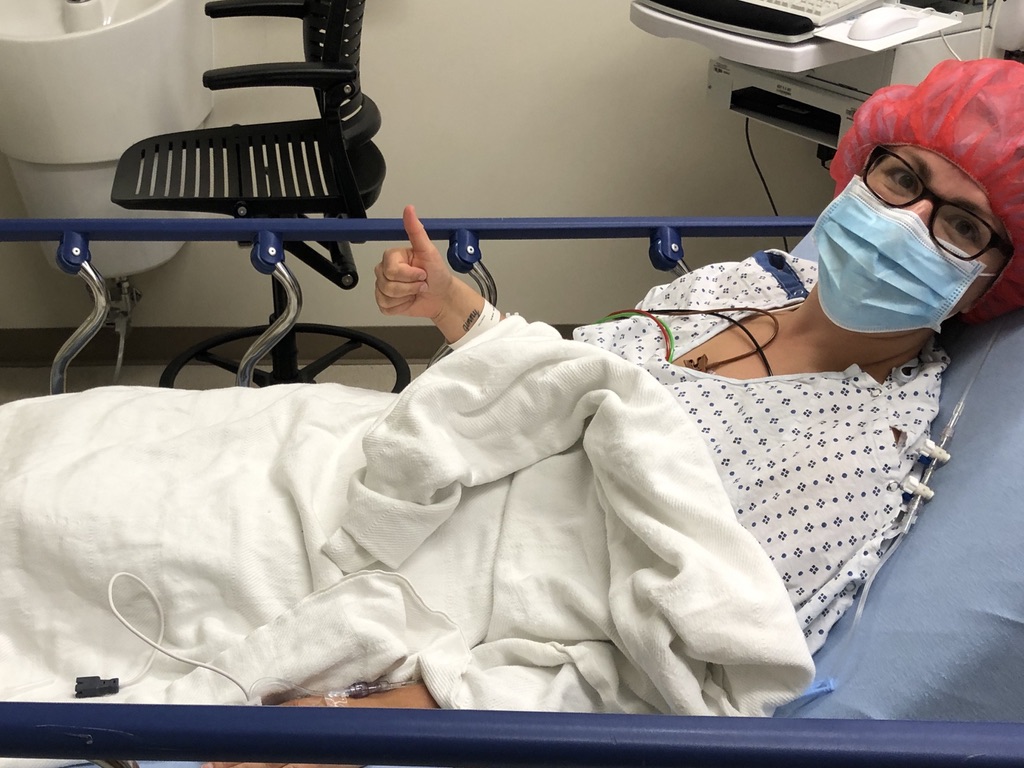
I scheduled my septum resection surgery via hysteroscopy for July 1. My parents came to town to help take care of Chet during surgery and recovery, and Daniel came with me to the hospital. As we arrived, we saw sunflower garden flags outside the gift shop – God always sends reminders of Ginny. It was nerve-wracking to be put under general anesthesia, but overall I felt peace about the surgery. The hospital was well organized, and things moved quickly. Before I knew it, I was waking up in post op trying to reorient myself (which was difficult to do since I left my glasses with Daniel). My very kind nurse helped me. 

One of the doctors came in to inform me about the surgery. The septum was much larger and thicker than they expected, but they were certain they removed it all. As she explained this, I broke into tears. She asked if I was alright, and I replied, “Yes I’m just thinking about my daughter who died.” She understood and was empathetic. Daniel and I went so long without knowing what happened to Ginny, so to get confirmation that what caused it was significant and is now gone was overwhelming in that moment. 

The doctor then informed me that there was one complication during surgery – the last portion of the septum went so deep into my uterus wall that while removing it, they made a small perforation in my uterus. This was a risk they mentioned prior to the surgery. It’s unfortunate, but thankfully the uterus heals very well on its own. The area that was perforated was the least-risky place, and it should not pose any additional risks in future pregnancies. 

My recovery has gone smoothly. I’m so grateful for my parents and Daniel for taking care of me and Chet this week. I couldn’t do this without them. Any discomfort that I have been in during recovery feels so minor compared with the benefits of this surgery. I’m so grateful. 

I still can’t believe we found out what caused Ginny’s death! I can’t believe that it was fixable, and I can’t believe Chet survived in the womb prior to it being fixed! I’m so relieved that it is fixed now. 

This surgery has me asking “why” again. Why was I born with this septum? Why didn’t we find it sooner? Why did Ginny die? Why was Chet spared? I think it’s ok to ask these questions even if we don’t always get answers. Life isn’t easy, but God gives me peace by reminding me that we have hope. Ginny is happy and loved in heaven, and we will be a complete family together one day. 

Thank you for all your prayers! 

Stillbirth Q&A

How can you comfort a friend who has experienced baby loss?

  • Know there is nothing you can say or do that will fix it or ease the pain. Do not even try. What is the most helpful is to sit with them in the pain. Acknowledge it, and validate that this is really hard. You can do that by listening, texting, or even sending a card. You do not need to offer a silver lining, as much as you may want to. 
  • Say their baby’s name! Let them know you are thinking about their baby. Don’t be afraid to bring it up. Remember important dates like heavenly birthdays and due dates. Send a text or call on the anniversaries of those dates, year after year. That is such a blessing to a mom or dad whose baby died.
  • Be understanding if they don’t seem like the friend you used to know. They are never going to be the same, and they are coming into their new identity. Be supportive of that. Invite them, but let them know it’s ok if they don’t come to your baby shower or if they want to sit out your birthday party. Give them grace after grace, but please keep inviting them. It is very isolating to lose a baby, and it can often feel like you are losing friends too. Keep reaching out. 

What’s the best way to tell a friend who lost a baby that you are pregnant?

We had wonderful friends write us a heartfelt letter telling us they were pregnant a couple months after Ginny died. It meant so much, and we were truly happy for them. I definitely recommend writing a letter, text, or private message. It is good for the friend to be able to process the emotions ahead of a face-to-face meeting. You can tell them one on one, but I definitely would not recommend announcing in front of a group or via a social media announcement. Even if the friend is really happy for you, they will still have a lot of conflicting and difficult emotions. Give them grace and patience.

How could you bear the pain of childbirth without a living baby? Why didn’t you have a C-section?

There are more risks to the mother with a C-section than a vaginal delivery, and I wanted to deliver her as I had imagined. It was a way to mother her. It was so scary, but it felt like such an honor. I did have an epidural, but it didn’t work on the right side. Looking back, I’m glad it didn’t because it gave me physical pain to yell through. My heart was in such agony that I needed that physical outlet.  Although it was hard, I look back at that day with love and pride.  Giving birth was the easy part. Living everyday after without Ginny was the hard part. 

Did you take pictures of Ginny’s body? Do you share them? Why?

  • There is absolutely nothing wrong with sharing pictures of a baby who died. Just as all parents are proud of their kids and want to show them to the world, loss parents feel the same way. These are the only pictures we have of our children. When we see them, we see their life, not their death.
  • This wasn’t something I thought about before Ginny died. We made this decision while I was in labor. It seemed so strange to me to take pictures of a dead person, but it would be our only chance to have pictures of her outside the womb. It didn’t seem right to me to take pictures of her with our phones. That seemed so casual. I didn’t want to take a picture of her the way I would take a picture of a latte. I didn’t want to see her as I scrolled through my phone. It felt like a sacred moment, and the phones did not seem sacred enough. We decided to have the nurse take pictures of her with a camera. I wish we did take pictures of us holding her as a family, but I couldn’t handle that at the time. We made the decisions best for the moment. We keep the photos in our memory box the nurse made. I have only shared them with a few family members and close friends. They are so precious to me. Maybe one day I will share them more broadly, but for now I hold them close. 
  • There is an excellent organization called “Now I Lay Me Down to Sleep” that send photographers for this very purpose. I knew about this, but decided I didn’t want a photographer there. 

Why do you talk about your stillbirth? Why do you blog?

  • I talk about Ginny often to whoever will listen. I talk about her because I think about her all the time. She’s my child and is still a huge part of my life. I love her so much. When I think and talk about her, I’m filled with love (just as anyone is when they talk about their child). I appreciate all those who listen and who bring her up in conversation. I’m sorry if it makes you sad or uncomfortable. It really does make me happy. 
  • At first I struggled with whether I wanted to post about Ginny’s death on social media. But then I realized that I had posted about expecting her so it felt strange to not say anything else. I planned to post once to announce her death and not mention it again. But then I started writing. I started writing just for myself for my own healing. I was not planning on sharing; I didn’t typically share much on the internet, especially something so emotional and personal. But then I felt that the Holy Spirit was prompting me to share. I didn’t want to, but I did anyway. After I posted, I realized how many people could relate to our story. It led me to meet several women who also lost babies. I realized how much of a stigma there is around baby loss and death in general. I realized how little people actually know about grief. It is valuable to share our stories to help each other feel a little less alone and give each other permission to grieve. 

What’s the hardest part of stillbirth?

When your baby dies, you don’t just lose a baby. You lose a toddler, a child, a teenager, an adult child. You miss every birthday, Christmas, first day of school, wedding, grandchildren. You miss every “good morning” and every “good night”. You miss every hug. You miss every sporting event and evening stroll. You miss all the would-be memories and all the mundane moments you would’ve forgotten. You miss it all.

What’s the hardest part of pregnancy after loss?

The hardest thing for me was feeling like my body was a ticking time bomb. It was painful not knowing when or if your baby is in danger. By the end, waiting and trusting was so difficult. It is the second hardest thing I’ve ever been through. Of course it was worth it all to have Baby Chet. 

Do you plan on telling Chet about Ginny?

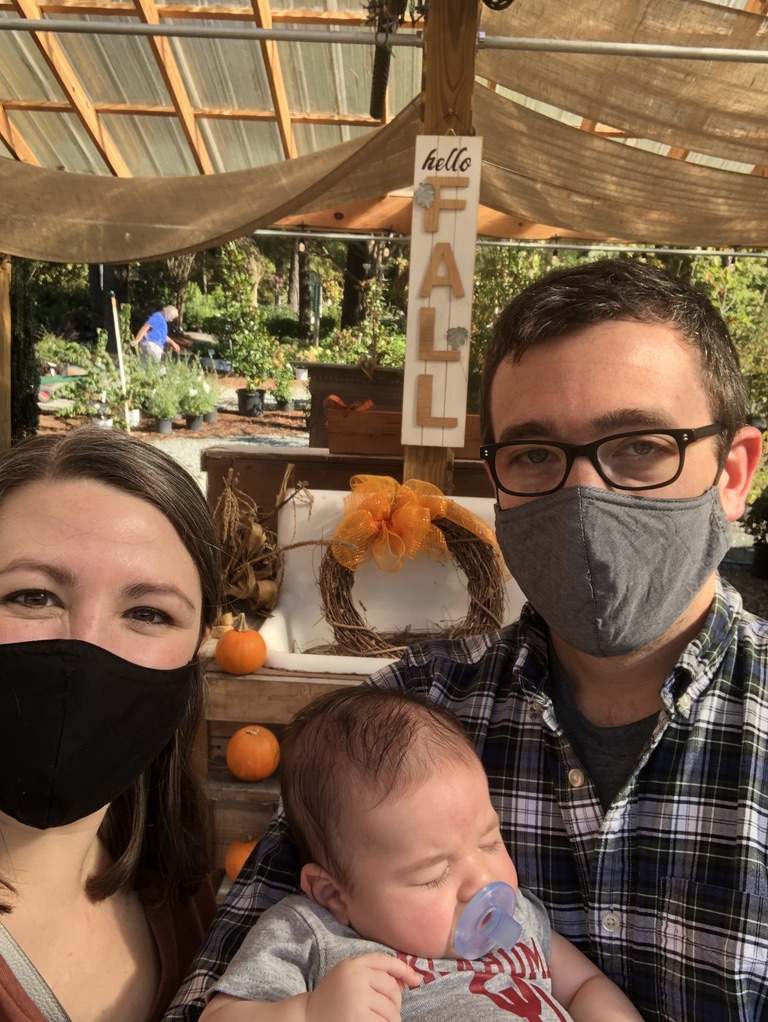
We already talk to Chet about his big sister Ginny in heaven. We will continue to talk about her, so Chet will always know her as part of our family. We include her in family traditions. For example, when we went to the pumpkin patch, we picked out a pumpkin for Chet and one for Ginny. We have a Christmas stocking for Ginny too. Anytime we see a butterfly when we go on family walks, we are reminded of Ginny. I tell Chet that Ginny’s thinking about us and loves us.